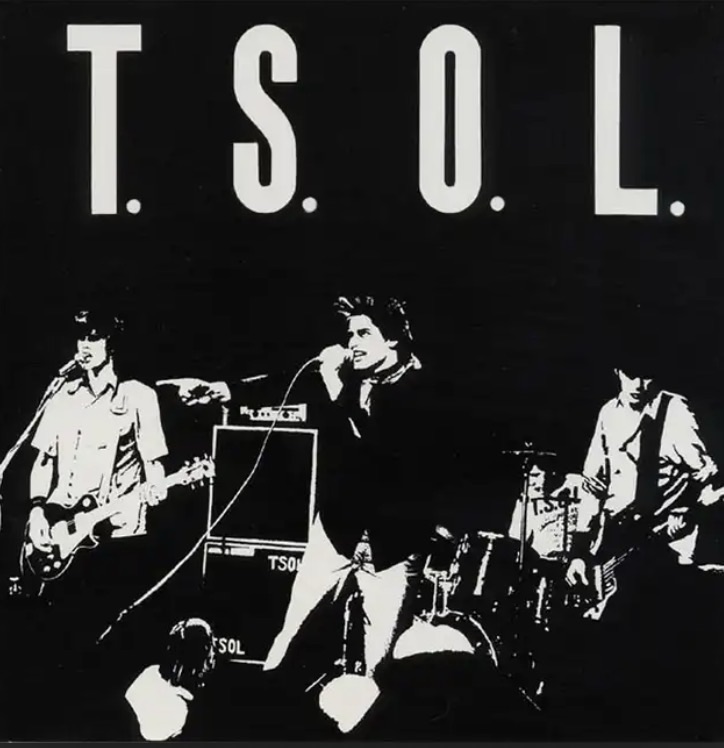
Southern California punk veterans T.S.O.L. may be approaching the final chapter of their long and often turbulent history. Frontman Jack Grisham has shared a message that stops short of announcing a breakup but strongly suggests that the band’s upcoming early January shows could be among their last.
In his statement, Grisham repeatedly returns to a simple, heavy line: “46 years is enough.” He does not frame it as a definitive farewell, nor does he declare the band officially over. Instead, the message reads like a moment of reckoning. After decades of touring, recording, lineup changes, and survival through multiple eras of punk, the physical and mental cost of continuing appears to be weighing heavily.
Earlier this year, Grisham offered a candid look behind the curtain at what keeping T.S.O.L. on the road now actually looks like. Drummer Antonio Val Hernandez joined following the Trigger Complex record, stepping in as longtime drummer Roche took time to recover and heal, though Roche has still made occasional guest appearances. Brandon Reza has also filled in on drums with Roche’s support. Keyboardist Greg Kuehn remains part of the band when schedules allow, mostly appearing at home shows, with the notable exception of joining the band on a run in China.
Founding guitarist Ron Emory is still officially in T.S.O.L., but ongoing shoulder issues and the need for another operation have made extended touring difficult. Trevor Lucca has been filling in for Ron on the road, keeping the live shows moving forward. Even with that support, Grisham has been clear about the limits. T.S.O.L. do not travel in buses, do not have a crew, and do not tour with comfort or excess. It is vans, long drives, and cheap hotels. The grind is constant, and the margin for rest is thin.
Grisham has also drawn a firm personal line. He has said plainly that the day Ron decides he is finished is the day T.S.O.L. ends, if not sooner. While he still enjoys playing the songs, he has no interest in continuing long-term if he is effectively carrying the band alone. That sentiment gives his recent “46 years is enough” comment extra weight, framing it less as drama and more as an honest assessment of reality.
For a band that helped define hardcore punk’s early chaos and later expanded into darker, more experimental territory, the idea of T.S.O.L. quietly stepping away feels both fitting and unsettling. There is no farewell tour announcement, no legacy packaging, no forced nostalgia. Just a frontman acknowledging the toll of nearly half a century spent doing things the hard way.
Whether the January shows truly mark the end or simply another pause remains unknown. What is clear is that T.S.O.L. are operating on borrowed time, guided less by ambition and more by endurance. If these performances do turn out to be among their last, they will close the book the same way they wrote it: on their own terms, without ceremony, and without compromise.