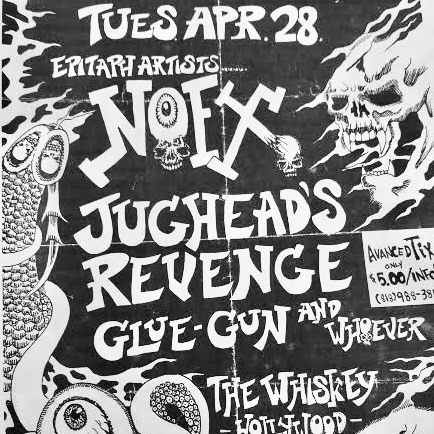
The Punk Rock Museum is opening 2026 by shining a spotlight on one of punk’s most stubbornly independent bands. A full-scale NOFX exhibition is set to open on January 16, 2026, fittingly landing on Fat Mike’s birthday. Rather than a quick retrospective, the museum is framing this as a deep, personal look at four decades of a band that helped redefine what it meant to survive in punk without playing by the usual rules.
The exhibit is being built around material that has largely stayed out of public view until now. Visitors will see never-before-shared photographs, original flyers pulled straight from Fat Mike’s personal collection, and rare artifacts that trace NOFX from their early DIY chaos through years of constant touring, controversy, and self-sufficiency. The aim is not to polish the band’s history, but to present it honestly, messiness and all.
What makes this exhibit stand out is how hands-on it plans to be. Smelly will lead guided tours throughout the opening weekend, with additional tours featuring Fat Mike and El Hefe, joined by longtime NOFX crew members Kent “Man-A-Ger,” Rugly, and Jay Walker. The focus is clearly on the people who lived this story day to day, not just the band members, but the crew who helped keep everything moving for decades.
There will also be a roundtable discussion bringing band members and crew together to talk openly about life on the road, the internal struggles, and the moments that never made it into liner notes or interviews. The museum has hinted that this won’t be a scripted nostalgia session, but a real conversation shaped by memory, humor, and hard-earned perspective.
Exclusive merchandise will be available for the event, including limited-run shirts and sticker packs. One of the most interesting additions is a Punk Rock Museum “Quarter Album” release featuring previously unheard NOFX demos. Even longtime fans who think they know the catalog inside out will be getting something genuinely new.
A special performance is also planned, though expectations are being deliberately managed. This will not be a full NOFX reunion, and it will not feature all four members playing NOFX songs together. That refusal to give people exactly what they expect feels perfectly in line with a band that has spent its entire career doing things their own way.
Seen as a whole, this exhibition feels less like a goodbye and more like a moment of reflection. It captures NOFX’s history while the people who built it are still here to tell it themselves, unfiltered. For a band that spent decades rejecting institutions, ending up in a museum might seem ironic. In reality, it feels intentional, a chance to document a legacy on their own terms, before anyone else tries to rewrite it.