
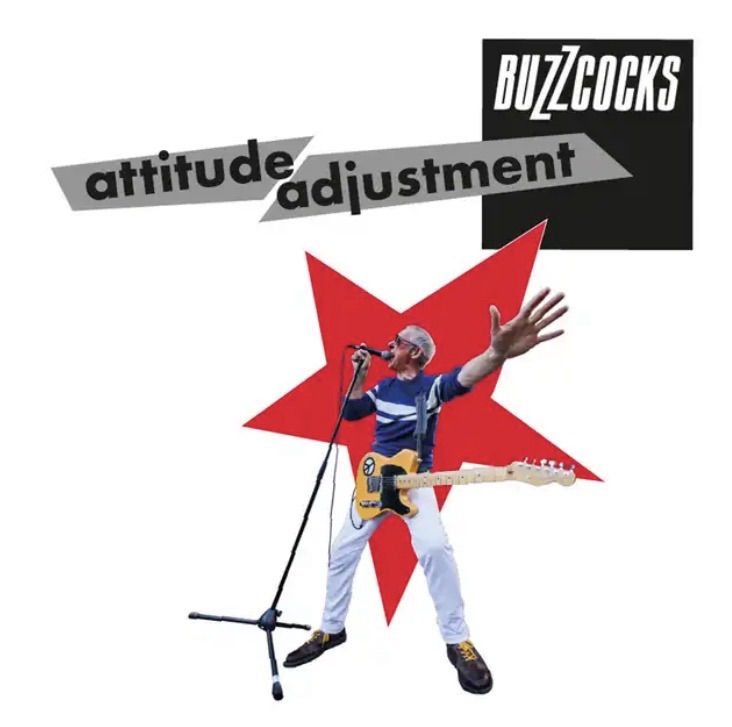
With Attitude Adjustment, Buzzcocks aren’t chasing the past. They’re leaning hard into what they’ve become. Released in January 2026 via Cherry Red, the album finds the Manchester legends pushing further into rock ’n’ roll territory, without cutting ties completely with their punk DNA.
This is not a fast record. It’s not nervous or twitchy like the late-70s material. Instead, Attitude Adjustment runs on groove, crunch, and confidence. The guitars are thicker, the tempos broader, and the songs breathe more than they used to. It sounds like a band that’s stopped trying to outrun time and decided to play straight through it.
Steve Diggle leads the charge, and his voice sits right at the center of the record. The songwriting carries weight and experience rather than youthful anxiety. Where classic Buzzcocks once exploded with urgency, these songs move with intention. There’s swagger here, sometimes bordering on pub-rock grit, but the melodic instinct never disappears.
Tracks like “Queen Of The Scene” open the album loud and direct, setting the tone with a punchy hook and thick distortion. “Poetic Machine Gun” fires quickly and sharply, while “Tear Of A Golden Girl” pulls melody back into focus with one of the album’s most immediate choruses.
The record also plays with structure. “One Of The Universe (Part One)” and “Part Two”, split by “All Gone To War,” give the album a loose narrative arc rather than a straight sprint. “All Gone To War” stands out for its stripped-down approach, showing a reflective side rarely explored this openly by the band.
Across the tracklist, the influences drift closer to classic rock and early power pop than traditional punk. There are flashes of garage swagger, hints of soul, and plenty of straight rock ’n’ roll drive. Some longtime fans may miss the speed, but the attitude never fades. The hooks are still there. The bite is still there. It’s just delivered differently.
What Attitude Adjustment does well is sound honest. It doesn’t pretend Buzzcocks are twenty again. It doesn’t recycle old riffs or lean on nostalgia. Instead, it captures a band that still wants to write new songs, still wants to say something, and still believes punk is an approach, not a tempo.