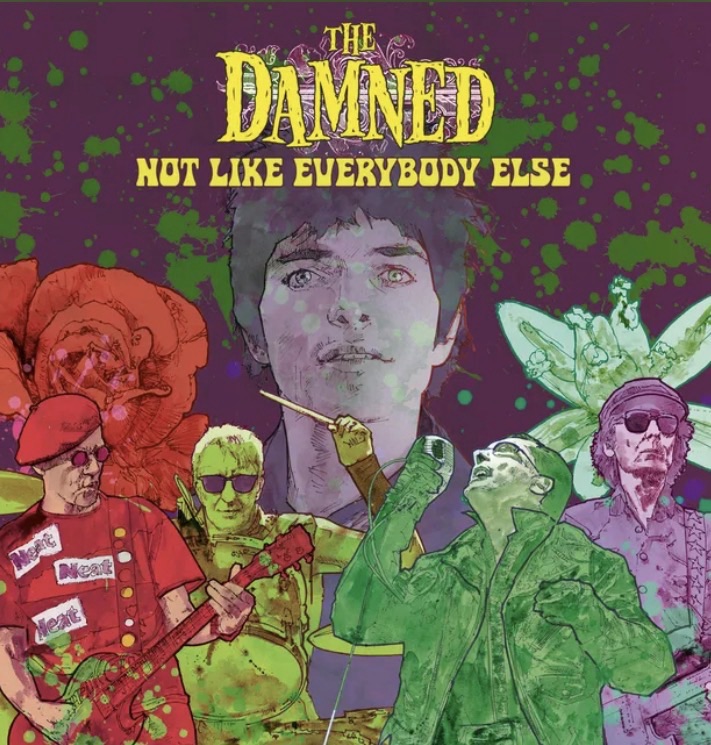
Not Like Everybody Else is not a standard covers album and it never tries to be one. Instead, it plays like a window into the records that shaped The Damned long before punk had a name. The album functions both as a tribute to late guitarist Brian James and as a reminder of the band’s deep roots in 60s garage rock, psychedelic pop, and early British rock’n’roll.
Rather than choosing predictable classics, The Damned dig into songs that feel personal. These are not reinterpretations made for novelty. They sound like tracks the band grew up with, filtered naturally through decades of their own identity.
The album opens with “There’s A Ghost In My House,” a track that immediately feels at home in The Damned’s world. What was once Northern Soul energy becomes darker and more dramatic, driven by tension rather than bounce. It sets the tone for the record’s slightly haunted atmosphere.
“Summer In The City” stands out as one of the most surprising moments. The band strip away the original’s sunshine and replace it with grit and urgency, turning a familiar song into something tougher and strangely claustrophobic. It feels urban, restless, and unmistakably Damned.
On “See Emily Play,” the band lean fully into psychedelia. Instead of exaggerating the weirdness, they smooth it into something melodic and hypnotic, allowing the song’s dreamlike quality to merge naturally with their gothic edge. Dave Vanian’s voice gives it an eerie calm that reshapes the track completely.
The record turns heavier with “Gimme Danger,” one of the album’s most aggressive cuts. Thick bass, darker tones, and a grinding tempo give the song real weight, showing the band’s ability to sound menacing without relying on speed.
Elsewhere, tracks like “Heart Full Of Soul” and “When I Was Young” lean into atmosphere. These songs highlight the band’s control over mood, proving that intensity doesn’t always require distortion. Subtle arrangements and restrained performances allow the emotion to surface slowly.
The closing cover of “The Last Time” carries added meaning. It doesn’t feel chosen for familiarity, but for significance, closing the album with a sense of reflection rather than spectacle. It ties the record back to Brian James and the era that shaped him, giving the album a quiet emotional anchor.
What makes Not Like Everybody Else work is its cohesion. Despite pulling songs from different decades and styles, the album never feels scattered. The Damned’s identity binds everything together. Each track sounds like part of the same universe, shaped by experience rather than reinvention.
This is not an album about looking backward with nostalgia. It is about acknowledging origins without being trapped by them.
Not Like Everybody Else stands as a deeply personal release. A record about influence, memory, and continuity. Even when playing other people’s songs, The Damned remain unmistakably themselves.